


English
The Gallery of Oriental Art

Located on the third floor of the National Museum of Art of Romania central building on Calea Victoriei, alongside the European Decorative Arts Gallery, the Oriental Art Gallery shows nearly 600 art objects from Azerbaijan, Bulgaria, China, Dagestan, Egypt, Greece, India, Iran, Japan, Syria, Turkey, Turkmenistan, and Uzbekistan. The pieces are selected from the most significant and valuable collection of Oriental and Far Eastern art in the country, managed by NMAR.
The creation of this new permanent exhibition, unique in Romania, is the result of a collaborative effort involving museum curators, conservators, restorers, technicians and management as well as several partners, sponsors, and donors who supported the project over time: the "Friends of NMAR" Association, JTI, BRD Groupe Societe Generale, Camelia Șucu, Raiffeisen BANK, Coca-Cola Romania, Romcar, Banca Comercială Română, Tomini Trading, TNT Romania, Solmar Trading Group, Soft Medica, Romtelecom, Unilever, Veronica Savanciuc, ITH Management Office, CitiBank Romania, Leadership Development Romania, National Bank of Romania, Topo Capital Corporation, Domeniile Sâmburești and AQUA Carpatica.
Reopening of The European Decorative Art Gallery, 15th of January 2024

With an area of over 400 square meters, the European Decorative Art Gallery, composed of six rooms, illustrates four centuries of history of taste and refinement, innovations, manufactures and European craftsmen from Austria, Belgium, the Czech Republic, Switzerland, France, Germany, Italy, Holland, Spain, Russia from the 16th-19th centuries and completes the museum's permanent exhibition, alongside the European Art Gallery and the National Gallery.
Included in the exhibition is a wonderful marriage box made in Dresden in 1586, ceramics from the famous faience factories of Delft (Netherlands), Manises (Spain), Montelupo Fiorentino and Savona (Italy), Rouen, Moustiers and Sèvres (France), Meissen (Germany), Provençal furniture and French tapestries, as well as special silver pieces alongside the famous Bohemian crystal glasses. The craftsmanship of Russian craftsmen can be admired in the delicate cloisonné silver pieces, the niello silver glasses or the Punch Bowl made by the famous Fabergé workshop. Also, a precious collection of watches illustrates the excellence of jewelers and watchmakers from the most important workshops in Europe.
The presence of these objects in Romania attests to the fact that our country has always been in a European circuit of exchanges of cultural values.
Europe was not only the space for the manifestation of secular practices in the artistic field, but also a place where the creative input from other continents merged into defining expressions of the exceptionality of the human spirit. These varied cultural influences have, over time, contributed to the definition of a European identity that is also reflected in the gallery display.
The opening of the European Decorative Art Gallery is due to a passionate and involved team from the National Art Museum of Romania, made up of museographers, conservators, restorers and technicians, but also to an important contribution of sponsors and partners without whom this far-reaching project would not be possible. would have been possible: Association "Friends of MNAR", Raiffeisen BANK, Camelia Șucu, Coca-Cola Romania, Romcar, Banca Comercială Română, Tomini Trading, TNT Romania, Solmar Trading Group, Soft Medica, Romtelecom, Unilever, Veronica Savanciuc, ITH Management Office, CitiBank Romania, Leadership Development Romania, Banca Națională a României, Topo Capital Corporation.
The spaces that house this gallery have gone through an extensive redevelopment process, being heavily affected by the earthquake in 1986 and the fire in 1989. The opening required the creation of showcases in accordance with the latest standards in the field, ensuring both security and high standard display.
The European Decorative Art Gallery benefits, for the first time, from a digital component, the MyMNAR application, to be used during the visit in the gallery to complement the exhibition course in an interactive way.
Access to the European Decorative Art Gallery is through entrance A2, floor 3, Calea Victoriei 49-53, Bucharest, Wednesday - Friday, 10:00 - 18:00 and Saturday- Sunday, 11:00 - 19:00.
The European Art Gallery
Organised around core works from the former Royal Collection, the gallery’s highlights include masterpieces by Domenico Veneziano, Tintoretto, Bronzino, Lucas Cranach the Elder, Rubens, Brueghel the Younger, Rembrandt, El Greco, Monet, Signac, and Rodin.
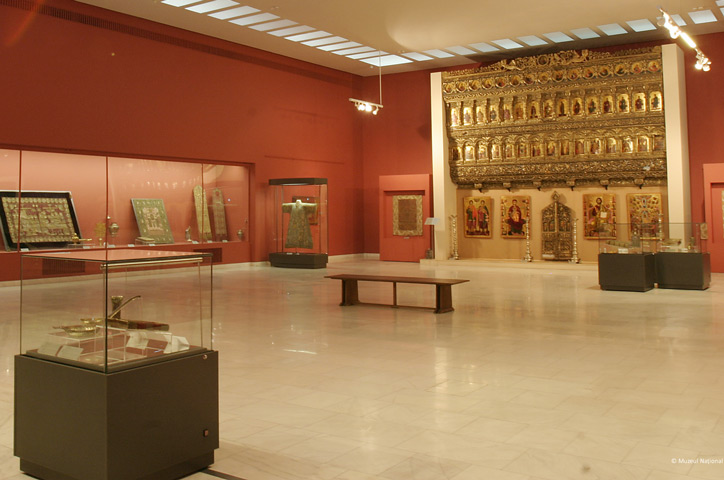
Discover
Muzeul Național de Artă al României, găzduit în clădirea fostului Palat Regal, adăpostește cea mai bogată colecție de artă românească (medievală și modernă), artă europeană, artă decorativă și artă orientală din țară. MNAR administrează, de asemenea, Muzeul Colecțiilor de Artă, Muzeul K.H. Zambaccian și Muzeul Theodor Pallady.
Temporary Exhibitions
Alongside our permanet galleries, we welcome you to a select number of temporary exhibitions, in partnership with prestigious museums or cultural institutions.

Satellite Museums
The Art Collection Museum, K.H. Zambaccian Museum and Theodor Pallady Museum are hosted by historical buildings and present many interesting art collections featuring the spirit of the old Bucharest.
Cabinetul de Desene și Gravuri
Patrimoniul de arte grafice al muzeului cuprinde desene, pasteluri, acuarele și gravuri realizate de artiști români renumiți din secolul al XIX-lea și din perioada interbelică, dar și de artiști francezi precum Delacroix, Bourdelle, Matisse, la care se adaugă colecțiile de gravură franceză, italiană, olandeză și flamandă, sectorul de caricatură și machete de afiș și fondul de schițe și proiecte de arhitectură. Cabinetul organizează periodic expoziții temporare în sălile dedicate artelor grafice din cadrul Galeriei de Artă Românească Modernă și Galeriei de Artă Europeană.
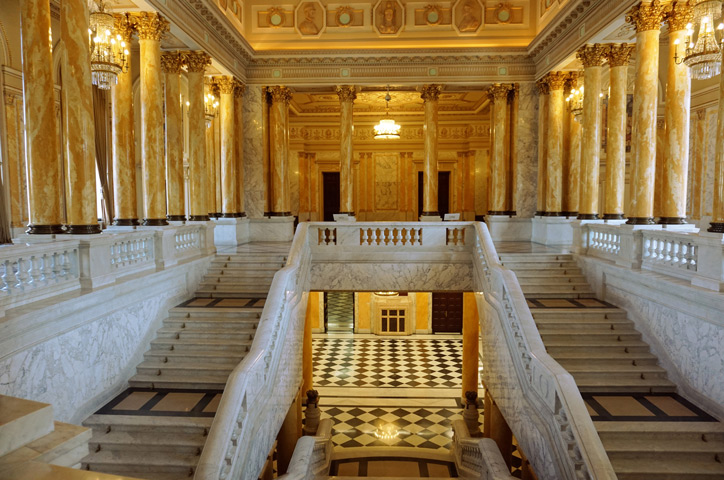
Royal Palace
The Throne Hall, the Royal Dining Room, and the Voievods’ Stairs testify to the palace’s royal past.
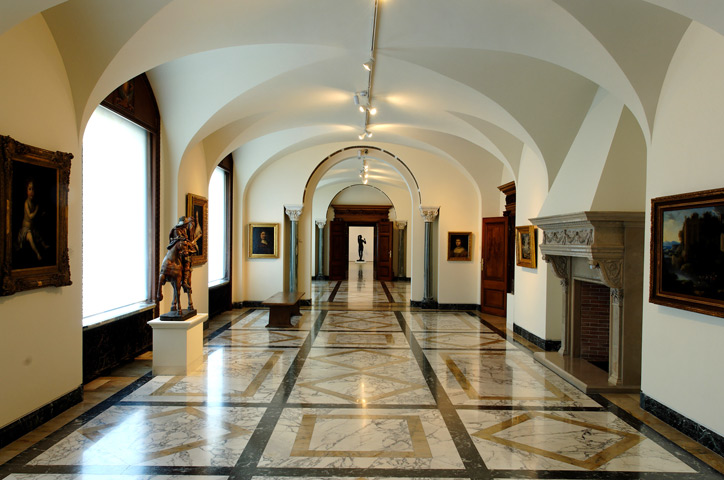
Permanent Galleries
The museum's permanent galleries include the National Gallery (Romanian medieval and modern art) and the European Art Gallery, hosted in the palace's side wings.

Press
All press releases are in Romanian and can only be viewed in the Romanian version of the website.

Press releases
All press releases are in Romanian and can be viewed in the Romanian section of the website.
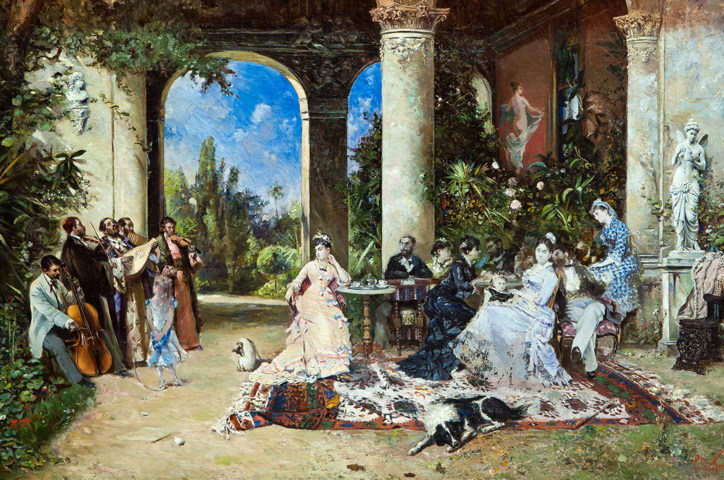
Drepturi de reproducere ale imaginilor operelor de artă aflate în patrimoniul muzeului
Drepturile de reproducere vor fi aplicate numai pe baza cererii explicite din partea unor edituri, trusturi de presă, etc. în care să se precizeze datele publicaţiei (genul: volum, site, dimensiuni, tiraj, limba ediţiei, ediţie bilingvă, etc.).
Servicii de ghidaj pentru grupuri organizate
Grupurile organizate formate din maximum 25 de persoane pot solicita vizite ghidate în limbile română, engleză sau franceză, în galeriile permanente ale Muzeului Național de Artă al României, în spațiile istorice ale Palatului Regal sau la muzeele-satelit.
Pentru prezentări se plătește o taxă suplimentară biletului de acces.
Taxe ghidaj:
- pentru grupuri vorbitoare de limba română: 100 lei/oră;
- pentru grupuri vorbitoare de limba engleză sau franceză: 200 lei/oră;
Programarea este obligatorie şi se face cu cel puţin zece zile în avans. Informații suplimentare la tel. 021.314.81.19 sau la This email address is being protected from spambots. You need JavaScript enabled to view it..

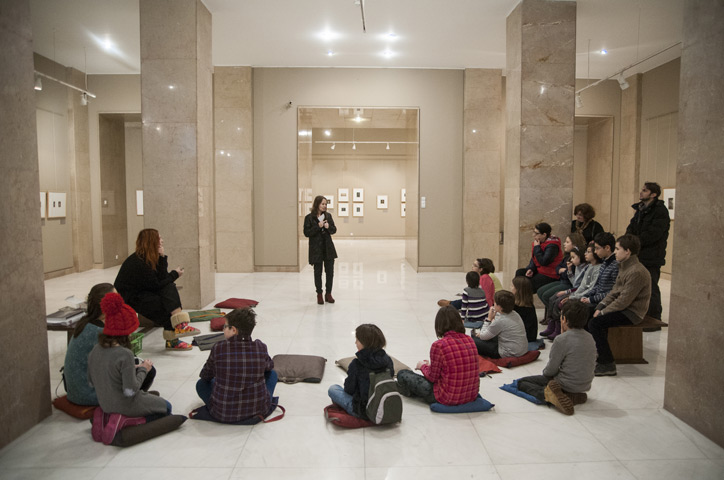
Învață
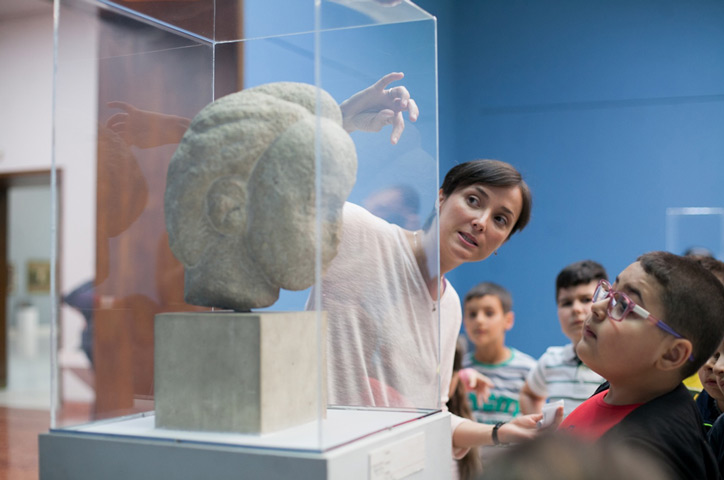
Family programmes
Family programs in Romanian are offered by experienced museum educators. They focus on developing observation and thinking skills for kids between 4 and 12 years old. All guided tours and programmes are followed by creative workshops.
Programmes are held in Romanian. For further information please contact us at programari@ art.museum.ro

Programmes and guided tours for adults
Our specialist and art professionals conceive great guided tours and programs, not only for art lovers with great knlowledge and interest, but also for the people who want to know more about art in general.
For further information please contact us at This email address is being protected from spambots. You need JavaScript enabled to view it.
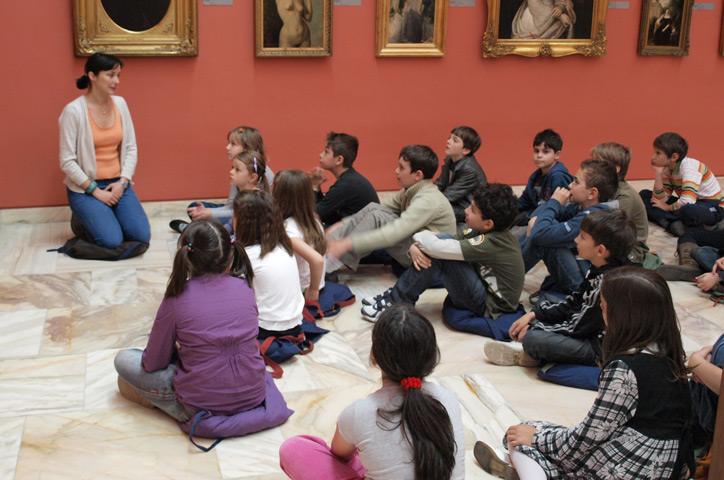
Programs for schools and kindergartens
Our programs for schools and kindergartens are only in Romanian and include special guided tours for children scheduled by teachers.
For further information please contact us at This email address is being protected from spambots. You need JavaScript enabled to view it.
Adolescenți
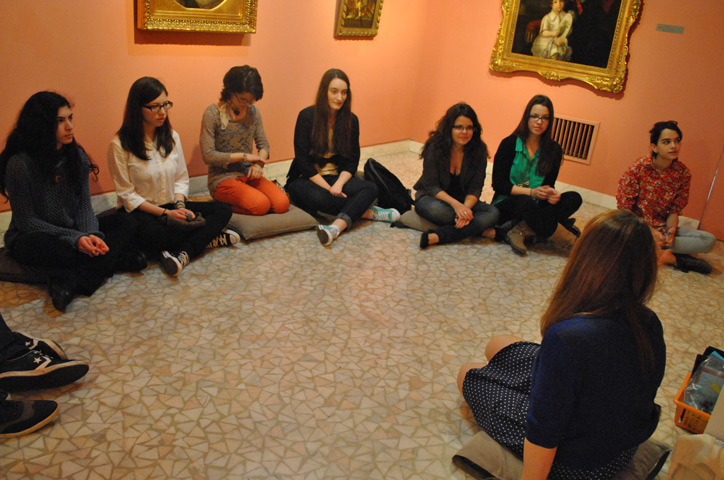
Întâlniri, evenimente şi programe dedicate tinerilor cu vârste cuprinse între 13 şi 19 ani care pot găsi, prin interacțiunea cu arta, noi oportunităţi pentru dezvoltarea personală.

Special needs
The visually and hearing impaired poeple are invited to our guided tours that feature workshops and multimedia experiences, followed by workshops that use special kits.

Trasee
O simplă vizită la muzeu se poate transforma într-o experienţă inedită atunci când ai... “accesoriile” potrivite: un traseu ca o hartă, te ghidează prin galerii, îţi oferă informaţii şi îţi propune activităţi interesante. Alege varianta care ţi se potriveşte şi descarcă gratuit traseul!
Calendar
Agregă toate categoriile de programe
Events
All public events are held in Romanian!
About the museum
Istoricul clădirii și al muzeului
Archive

Press releases
All press releases are in Romanian and can be viewed in the Romanian section of the website.
Projects
Conservation Secrets Brought to Light
Lucas Cranach the Elder - Venus and Cupid
Lucas Cranach the Elder (1472 – 1533) produced many versions of this mythological theme, the first being an engraving dated 1506, currently in Dresden.
The museum’s Venus and Cupid, acquired for the Picture Gallery of King Carol I of Romania, is dated 1520, a time when the artist was active in Wittenberg.
As in many of his paintings, the bow and arrow accompany Venus and Cupid as symbols of sufferings induced by love.
An 18th c. restoration significantly altered the painting’s initial outlook. The complex restoration carried out by Ioan Sfrijan, head of the museum’s Oil Painting Conservation Laboratory, revealed additional hair locks on Venus’s face and shoulders, a face uplift in line with 18th c. beauty standards, and a blue veil which conveniently covered the goddess’s naked body. All these alterations had cast a doubt on the painting’s authenticity.
Research revealed that the blue veil was made with Prussia blue, a pigment only used as of the beginning of the 18th c. Other additions could be clearly identified and separated from the original and minutely removed during a two-year process. The painting had thus regained its original character.


Services
Contact us you you want more details about our available spaces for concerts, movie screenings, conferences or other cultural events.


