


Atelierele „Spațiul personal” coordonate de Justyna Droń - în expoziția „Tadeusz Kantor-artist oriunde și oricând”

Miercuri, 5 martie, orele 10.00-18.00: „Ștampile pe țesături și hârtie manuală”;
Joi, 6 martie, orele 10.00-18.00: „Colaje cusute. Diversitatea materiei”;
Vineri, 7 martie, orele 10.00-18.00: „Serigrafie”;
Sâmbătă, 8 martie, orele 11.00-19.00: „Atelier de Reparații Obiecte Personale. Țesătură, Cusătură”;
Duminică, 9 martie, orele 11.00-19.00, „Artbook-carte artistică”.
Ziua Internațională a Copilului la MNAR

Cu ocazia Zilei Internaționale a Copilului, Muzeul Național de Artă al României și organizația Salvați Copiii realizează un program special dedicat acestui eveniment,
Astfel, în data de 30 mai 2024 copii din învățământul primar vor participa la atelierul de pictură cu tema „Portret de copil” care va include și o vizită ghidată în Galeria de Artă Europeană. La final, lucrările realizate vor face parte dintr-o expoziție organizată în holul Sălii Auditorium, Str. Știrbei Vodă nr. 1, în perioada 31 mai – 30 iunie 2024.
Acest proiect se adaugă celor cuprinse în cadrul colaborării cu Organizația Salvați Copiii demarată în anul 2021 și care constă în realizarea unor activități educative la muzeu pentru copiii cuprinși în programele acestei organizații.
În cei trei ani de colaborare, 1.500 de copii au luat parte la ateliere de creație, precum Portretul, Pasărea ascunsă în piatră - atelier Brâncuși, Moda spaniolă, Neagoe Basarab, Formă și culoare iar pe parcursul anului curent peste 200 de copii au beneficiat de vizite active și ateliere educative organizate la MNAR.
Pentru toți copiii experiențele de la MNAR au fost primele ocazii de a păși în lumea artei și de a se manifesta creastiv într-un domeniu nou, care i-a cucerit imediat.
Evenimentul organizat cu prilejul Zilei Internaționale a Copilului își propune să facă cunoscute creațiile acestor copii și imensul potențial educativ și creativ pe care îl poate oferi Muzeul Național de Artă al României.
The Concert of Paintings in the Art Collections Museum
Catch your breath while admiring the dialogue between two arts: music and paiting. By following the tour we sugest, you will not only discover the link between visual artists and musicians, but also the mutual admiration expressed in the work of arts of these great spirits.

Corneliu Baba Collection – George Enescu
„Among the great artists of the world, Enescu stayed with me as an all-encompassing icon of the genius artist and of one of the noblest thinkers in art. I was still working on the portrait when news of his death reached me. I finished it after several months of tormenting work. It was presented at the Dalles Hall exhibition (1955), it was the key piece in the room, but critics hardly accepted it. Nobody understood, except perhaps those who knew his huge spiritual personality, why I imagined him with his head lowered, his back a little hunched, with that figure characteristic only to him, and why I didn’t see in him a proud and assured musician.
[...] The portrait is now in my workshop, where I paint a second version, made to express what was not expressed earlier.” (Corneliu Baba, Confessions and Diaries, vol. I, 1944 – 1965, The National Museum of Art of Romania, Bucharest, 2018)
Iosif Iser Collection – Harlequinade, Singer in blue with a musical instrument, Interior with two odalisques – Paulina and Mariana, Oriental Woman
On this second stop we propose not only this artist’s works, but also objects that belonged to him: four musical instruments were included in the exhibition. They were used by the artist as props for scenes with few characters interpreted by models. The artist himself decided their ‘pose’ with various attitudes and accessories.
One of the frequent motifs in his famous oriental women compositions is the theorbo, a string instrument from the lute family, well used by Iser as an accent in numerous paintings and drawings, in the late 1920s and especially in the early 1940s.
Iosif Iser often compared the drawing exercise to the musical one: “I was drawing constantly. The drawings are always for me what technique exercises are for a pianist.”
Elena end Anastase Simu Collection – Gentleman with a lute (Jacques Henri Lambert) and The Chorus (Hedwig Mechle Grossmann)
Lawyer, diplomat and politician, Anastase Simu (1854 – 1935) was one of the most important Romanian collectors of Western European art.
Gentleman with a lute, by Jacques Henri Lambert was acquired by Simu in Paris in 1907, the very year it was painted. The author distanced himself from the growing modernist trends, choosing subjects disconnected from immediacy, usually scenes with one or several characters dressed mostly in 17-th century European costumes treated in an unequivocally figurative style.
The Chorus, by the German artist Hedwig Mechle Grossmann, stands between the genre scene and the group portrait. The characters look in different directions as if interpreting a polyphonic score, resulting in a dynamic image. The lack of depth of the composition, while all characters are placed in the foreground, as well as the angle from which they are seen make the onlooker to feel accepted in the space of the painting and to almost become the intimate spectator of the concert.
Garabet Avachian Collection – Still life with guitar (Lucian Grigorescu)
Considered by the art critics one of the best Romanian colourists, Lucian Grigorescu always searched, through the orange shade in his paintings, for the red shade of the soil in the Dobruja province where he had spent his childhood. The southern colours, the brown, the orange, the ochre, are present in Still life with guitar as part of the chromatics closely linked to his biography.
Collector Garabet Avachian was a violin professor at the Ciprian Porumbescu Conservatory in Bucharest, where for a long time he taught many a virtuoso of this instrument.
Elisabeta and Moise Weinberg Collection – Interior in the artist’s studio (Gheorghe Petrașcu), Tatar woman with violin, Barbu the violinist , Still life with musical instruments (Iosif Iser)
The Elisabeta and Moise Weinberg Collection proves both the friendship between the collectors and the artists, but also the latters’ sensitivity to music.
To Iosif Iser, inspiration from the imaginary world of music is almost a personal hallmark. Thus it is only natural that his works featuring musical instruments are present in the Elisabeta and Moise Weinberg Collection, the Weinbergs being some of his keenest collectors. In the paintings Tatar woman with violin (1945) and Still life with musical instruments (1940), the instruments are attentively placed and seen from a monumentalizing angle.
In the same collection one can admire a small pseudo-portrait, in gouache, of Barbu the Violinist (Rom. Barbu Lăutaru) and his violins. This was a famous musician in the Romanian Principalities in the first half of the 19th century and became a favourite subject for Iser between 1930 and 1940.
One should not miss the painting by Gheorghe Petrașcu Interior in the artist’s studio where the elements of the composition (the easel, the bookcase, the table and instruments) revolve around the central image of a guitar. The studio, a space for toiling, learning and delecting, may synthesize, according to Petraşcu, the concept that some cultural historians named ’the modern system of the arts’.

The Concert of Paintings in the Romanian Modern Art Gallery
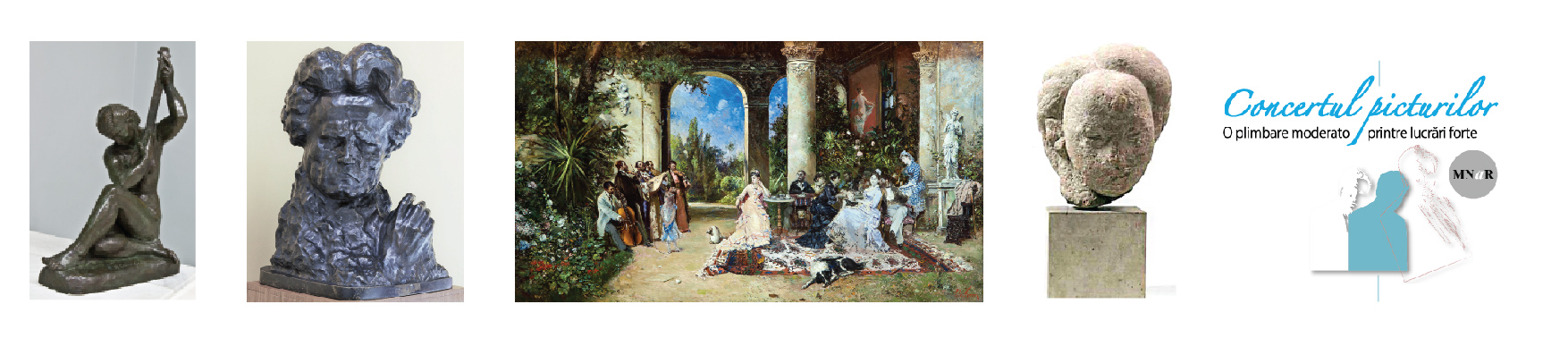
A society undergoing radical change, its artistic life receiving new influences and establishing its new directions, an art scene able to place the artist among fashion darlings, a new music marked by Enescu’s genius… This might be the backdrop against which Romanian modern art takes shape at the end of the 19th and beginning of the 20th century.

Here are the few stops of an imaginary tour in the Romanian Modern Art Gallery:
Theodor Aman (1831 – 1891), founder of the first Romanian art schools in Jassy and Bucharest, painter and draftsman, teacher and member of the Academy, was an artist belonging to his time. His works reflect the trends in the Bucharest high society to which he himself belonged: Party with musicians, Dress Ball in the artist’s workshop, Still life with a cello, etc. (Room 1)
Also named “the painter of nature”, Ștefan Luchian (1868 – 1916) is considered a passionate master of bright bold colours seen under intense light. One day, just before his tragic death, George Enescu played for him for hours, out of respect and love for Luchian’s art. (Room 3)
Next stop: Room 5, dedicated to sculptor Dimitrie Paciurea (1873 – 1932), Romanian artist known for the mysteriousness and the forceful symbolism of his Chimeras. Looking through the series dedicated by the artist to international personalities one remarks The Bust of Beethoven. Created in 1912, it embodies, in a symbolic approach, the essential creator by excellence.
The Avant-garde reunited artists who refused tradition and tempted the re-invention of art: Marcel Ianco (1895 – 1984), Max Herman Maxy (1895 – 1971), Arthur Segal (1875 – 1944), Victor Brauner (1903 – 1966). They all did painting and sculpting, decorative art and stage design, posters and architecture. How would music be seen through the eyes of an Avant-garde artist? You can find out in the Café Concert by Marcel Ianco. (Room 6) Maybe more than anyone else, Constantin Brâncuși (1876 – 1956), through his search for essences, his volumes so synthetic, full of energy and vibration, makes one wonder: what music was Brâncuși listening to? (Room 7)
The final stage of the tour in the Romanian Modern Art Gallery (also “drawn” for you in The Concert of Paintings) is in Room 11, in front of the Feminine Nude with a Mandolin. Created in 1941 by Romanian sculptor Boris Caragea (1906 – 1982), the work reminds the Greek classic era through its subject, composition and vigor of volumes, but at the same time the creations of French sculptor Aristide Maillol (1861 – 1944). Sculptor Boris Caragea is also the author of the 1961 statue of George Enescu, now to be seen in the vicinity of the National Music University in Bucarest.
The Concert of Paintings in the European Art Gallery
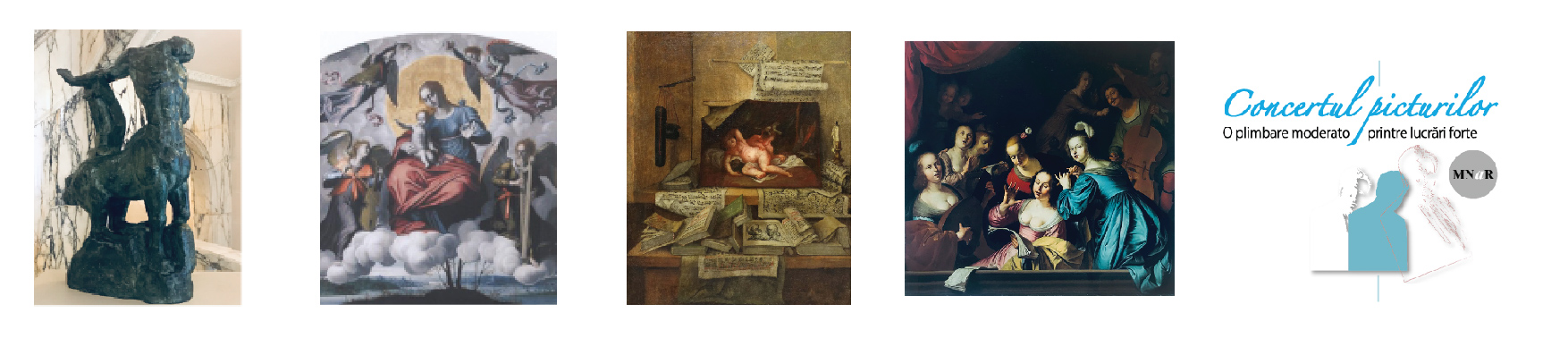
In your tour through the European Art Gallery, while admiring works by great artists such as El Greco, Rubens, Rembrandt or Monet, do not miss the five stops we prepared for the special tour dedicated to music as presented in the artwork on music subjects. You will be persuaded that many European artists were inspired by music, a language not only universal but also beyond time.

Jacopo Amigoni - Portrait of singer Carlo Broschi named Farinelli
The first stop on the musical tour in the European Art Gallery is with the Italian School and the “Portrait of singer Carlo Broschi named Farinelli”. In a grandiose arhitectural decor, the famous castrato Farinelli, presented in full size, is being crowned with laurels by Euterpe, muse of music. The winged feminine character in the background symbolises Fame, while the bust of the god Apollo or the garland lead to the idea of Farinelli’s artistic supremacy.
The author is Jacopo Amigoni (1682-1752), one of the most important representatives of rococo painting in Europe. Amigoni met Farinelli in person and made several portraits of him. The one shown in NMAR is considered the most complex.
Anonymous German artist from the XVIII-th century- Still Life With Music Notes
If you stop in the rooms showing works belonging to the German school, you can admire a XVIII-th century still life, painted in trompe l’oeil. The objects are exhibited on two wooden shelves, with a wall as a background. In the centre of the composition one discovers a small painting representing two children and several pigeons; the small painting is surrounded by music sheets. In the upper left register there is a knife thrust into the wall and from it an inkpot and a sheath for pens are hanging.
This work is now shown especially for the Campaign entitled The Concert of Paintings. A „moderato” walk among „forte” artwork.
Pedro Campaña – The Triumph of the Virgin Surrounded by Angels
For the third stop on this musical trip we propose a Renaissance religious work from the Spanish School: ”The Triumph of the Virgin Surrounded by Angels”. This painting shows the Virgin Mary holding baby Jesus in her arms. She is surrounded by four angels, two of them holding in their hands a harp and a violin. Musical themes are often present in religious works and they usually symbolize celestial harmony.
This painting was created by Pedro Campaña (1503–1580), considered to be one of the greatest religious painters in Seville by the mid-XVI-th century. Mainly inspired by Rafael, Peter de Kempeneer -- by his original name -- was a true Renaissance artist: painter, architect, sculptor, mathematician, astrologist, engineer.
Abraham Van der Schoor – The Concert
For a tour entitled „The Concert of Paintings”, the piece „The Concert”, shown in the Dutch School Rooms, is an absolute must.
In the XVII-th century, music was a popular passtime among the middle classes. Thus, such picturesque images, of musicians and robust singers, seen by the Flemish painters in theatrical lightings, exerted a powerful attraction on the Dutch artistic milieu. Abraham Van der Schoor, author of this painting, obviously did not escape it.
There are few informations on his life and career. But from the few of his works that reached us, one can see his attraction for the topic of the concert.
Émile-Antoine Bourdelle – Dying Centaur (second study)
Last stop: French School Rooms, to see the only sculpture on this musical trip. Made in bronze in 1914 by Émile-Antoine Bourdelle (1861 – 1929), the sculpture ”Dying Centaur” symbolises the sad destiny of an artist who wrestles with his own life and dies holding his lyre that represents his artistic ideal. A melancholic work on the death of the artist no longer credited by his audience.
Considered one of the most important modern sculptors, Bourdelle was an apprentice in the workshop of Auguste Rodin, whose influence is visible in Bourdelle’s early work.
Concertul picturilor din Galeria de Artă Românească Modernă
Click HERE for the English version.
O societate în plină schimbare, cu o viață artistică ce primește noi influențe și își stabilește noi direcții... Un peisaj artistic capabil să plaseze artistul în topul preferințelor modei și cu o muzică nouă, marcată de geniul lui George Enescu... Cam acesta este decorul în care arta modernă românească se conturează la sfârșit de secol XIX și început de XX.
Pe firul muzicii, primul artist care ne atrage atenția este Theodor Aman (1831 – 1891), întemeietor al primelor școli românești de arte frumoase de la Iași și București. Pictor și grafician, pedagog și academician, Theodor Aman rămâne în istoria artei românești ca un etern preocupat de epoca sa. Lucrările sale au preluat temele înaltei societăți bucureștene, din care el însuși făcea parte, precum în lucrările Petrecere cu lăutari, Bal mascat în atelier (Serata), Natură moartă cu violoncel și altele. (Sala 1)
Pe traseul modernității, ne oprim și asupra pictorului Ștefan Luchian (1868 – 1916). Supranumit „pictorul naturii”, Ștefan Luchian rămâne în arta românească modernă ca un pasionat al genului, un maestru al culorilor vii, îndrăznețe, supuse constant unei lumini intense. Respectul și iubirea pentru artă l-au îndemnat pe George Enescu într-o zi..., aproape de tragicul sfârșit al pictorului, să-i cânte ore întregi la căpătâi. (Sala 3)
Parcursul traseului ne invită să zăbovim ceva vreme și în sala 5 dedicată sculptorului Dimitrie Paciurea (1873 – 1932), artist român cunoscut pentru forța simbolismului și misterul himerelor sale. Dintre toate acestea, se va remarca una dintre lucrările dedicate personalităților universale – serie a artistului. Bustul lui Beethoven a fost realizat în 1912 și întruchipează, într-o viziune simbolistă, tipologia creatorului prin excelență.
Mergând mai departe, pe firul cronologic al artei românești moderne, nu putem să nu remarcăm segmentul avangardei, ce reunește artiști care au refuzat tradiția, propunând re-inventarea artei. Marcel Iancu (1895 – 1984), Max Herman Maxy (1895 – 1971), Arthur Segal (1875 – 1944) sau Victor Brauner (1903 – 1966), cu toții au făcut pictură și sculptură, artă decorativă și scenografie, afiș și arhitectură. Cum ar arăta însă muzica prin ochii unui pictor avangardist? Vedeți în Café Concert-ul lui Marcel Iancu. (Sala 6) Poate mai mult decât toți, Constantin Brâncuși (1876 – 1956) se remarcă prin căutarea sintezei, a esențialului, prin volumul pur, plin de forță și vibrații. Privindu-i operele, ne întrebăm: oare ce muzică asculta Brâncuși? (Sala 7)
Iar finalul traseului propus în Galeria de Artă Românească Modernă și „creionat” prin Concertul picturilor este marcat de oprirea în sala 11, în fața lucrării Nud feminin cu mandolină. Realizată în 1941 de scluptorul român Boris Caragea (1906 – 1982), lucrarea ne duce cu gândul la clasicismul grecesc prin subiect, compoziție și vigoarea volumelor, amintind în același timp de propunerile plastice ale sculptorului francez Aristide Maillol (1861 – 1944). Sculptorul Boris Caragea este și autorul statuii dedicată în 1961 lui George Enescu și amplasată lângă Universitatea Națională de Muzică din București.
Concertul picturilor de la Muzeul Colecțiilor de Artă
Click HERE for the English version
Acordați-vă un mic respiro pentru a vă bucura de dialogul dintre două arte: pictură și muzică. Urmând traseul muzical pe care vi-l propunem, veți descoperi nu numai legătura dintre artiștii plastici și muzicieni, ci și admirația reciprocă exprimată în operele acestor mari spirite.
1. Corneliu Baba – George Enescu
„Dintre artiștii mari ai lumii, Enescu mi-a rămas ca o icoană a tot ce poate cuprinde într-însa noțiunea artistului de geniu și a unuia din cei mai nobili gânditori în artă. Portretul era în lucru atunci când de departe a venit știrea morții lui. L-am terminat după câteva luni de muncă chinuită. A fost prezentat la expoziția de la Dalles (1955), a dominat sala, și totuși critica nu l-a acceptat decât cu rezerve. Nimeni nu înțelegea, decât poate aceia care au cunoscut marea lui personalitate spirituală, de ce l-am imaginat cu capul puțin plecat, adus puțin de spate, cu silueta aceea caracteristică numai lui, și de ce nu am văzut în el un lăutar cu fruntea sus, sigur pe sine.
[...] Acum se află în atelierul meu, unde lucrez la o nouă replică în care vreau să exprim ceea ce n-am putut exprima în prima versiune”. (Corneliu Baba, Confesiuni și Jurnale, vol. I, 1944 – 1965)
2. Colecția Iser -Arlechinadă, Cântăreața în albastru, Două odalisce, Odaliscă.
Pentru cea de a doua oprire vă propunem nu doar lucrările artistului, ci şi obiecte ce i-au aparţinut. Ansamblul de patru instrumente muzicale – expuse special cu ocazia acestei campanii – erau utilizate ca recuzită de pictorul care obişnuia să reprezinte scene cu puţine personaje, folosind modele pe care el însuşi le aşeza „în poză” în atelier, în diverse atitudini şi însoţite de varii accesorii.
Unul dintre motivele recurente din faimoasele sale compoziţii cu odalisce este cel al teorbei, instrument cu coarde din familia lăutei, abil exploatată de Iser ca accent compoziţional în numeroase lucrări de pictură şi grafică, începând cu finalul anilor 1920 şi, mai ales, în prima jumătate a anilor 1940.
Iosif Iser compara adesea exerciţiul artistic cu cel muzical: „Desenam într-una. Desenele erau şi au rămas pentru mine ceea ce sunt gamele pentru un pianist.”
3. Colecția Simu - Gentilom cu lăută (Jacques Henri Lambert) și Corul (Hedwig Mechle Grossmann)
Juristul, diplomatul şi omul politic Anastase Simu (1854 – 1935) a fost unul dintre cei mai importanţi colecţionari români de artă europeană occidentală activi la finalul secolului al XIX-lea şi în primele decenii ale secolului XX.
Tabloul Gentilom cu lăută de Jacques Henri Lambert a fost achiziţionat de Simu de la Paris chiar în anul realizării sale, în 1907. Pictorul a fost unul dintre artiştii care, delimitându-se de curentele moderniste în plină expansiune, a optat pentru subiecte lipsite de racordare la cotidianul imediat, în genere scene cu unul sau mai multe personaje înveşmântate anacronic, cel mai adesea după moda europeană a veacului al XVII-lea, tratate într-un registru stilistic de un figurativism inechivoc.
Lucrarea Corul, pictată de artista germană Hedwig Mechle Grossmann, are un caracter hibrid, la limita între scena de gen şi portretul de grup. Dinamismul imaginii este dat de orientarea diferită a personajelor, ce par să interpreteze o partitutură polifonică. Lipsa de adâncime spaţială a compoziţiei, cu includerea în prim-plan a tuturor personajelor, precum şi unghiul din care acestea sunt redate fac ca privitorul tabloului să se simtă acceptat în spaţiul reprezentării, aproape transformat într-un spectator intim al concertului.
4. Colecția Garabet Avachian - Natură moartă cu chitară (Lucian Grigorescu)
Considerat de criticii de artă unul dintre cei mai buni „colorişti” români, Lucian Grigorescu a căutat prin oranjul din tablourile sale, nuanţa roşului dobrogean din copilăria sa. Culorile de inspiraţie meridională – brunul, oranjul, ocrul – se regăsesc şi în Natura moartă cu chitară, ca parte a unei cromatici atât dragi din biografia sa.
Colecționarul Garabet Avachian a fost profesor de vioară la Conservatorul „Ciprian Porumbescu” din Bucureşti, unde a format ani la rând numeroşi virtuozi ai acestui instrument.
5. Colecția Weinberg - Interior de atelier (Gheorghe Petrașcu), Tătăroaică cu țibulcă, Barbu Lăutaru, Natură moartă (Iosif Iser)
Iosif Iser este un artist pentru care motivele inspirate de imaginarul muzical reprezintă aproape o marcă personală. Moise Weinberg, colecționarul cel mai pasionat al lucrărilor sale, l-a cunoscut pe „pictorul odaliscelor” în 1940, iar între cei doi s-a legat o prietenie de câteva decenii. În tabloul Tătăroaică cu ţibulcă – Odaliscă (1945) şi în natura moartă cu vioară şi cobză (Natură moartă cu instrumente muzicale, 1940), instrumentele sunt foarte atent aşezate în scenă și reprezentate dintr-un unghi care le monumentalizează.
În aceeași colecție puteți admira şi un mic pseudo-portret în guaşă al lui Barbu Lăutaru cu cobză, faimos muzicant activ în Ţările Române în prima jumătate a secolului al XIX-lea, subiect abordat de Iser în mod repetat în anii 1930-1940.
Semnalăm și tabloul lui Gheorghe Petrașcu Interior de atelier - un colţ din atelierul artistului în care elementele compoziţionale (simeza, biblioteca, masa cu instrumentele de lucru) gravitează în jurul motivului central al unei chitare. Spaţiu de lucru, de instruire şi de delectare, atelierul pare astfel să sintetizeze, în viziunea lui Petraşcu, ceea ce istoricii culturii au numit „sistemul modern al artelor”.

Romanian Modern Art Gallery
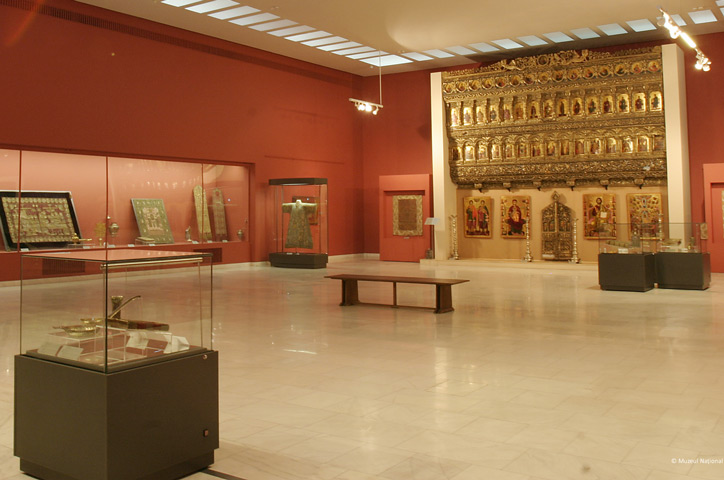
The Romanian Modern Art Gallery tells the story of Romanian art from the mid-nineteenth to the late twentieth century. Representative works by Theodor Aman, Nicolae Grigorescu, Ioan Andreescu, Theodor Pallady among others, illustrate connections with contemporary French painting while those of M.H. Maxy, Marcel Ianco, Victor Brauner trace the contribution of Romanian art to the European avant-garde of the 1920s and 1930s. Early sculptures by Brancusi reveal the master’s will to break away from academic tradition and find a way of his own.

"A Century of Bessarabian Painting: One hundred works from the collection of the National Art Museum of Moldova in Chișinău.”
The National Museum of Art of Romania and the National Art Museum of Moldova in Chișinău (MNAM) invite you to the opening of the exhibition "A Century of Bessarabian Painting: One hundred works from the MNAM collection," which will take place on Wednesday, March 27, 2024, at 15:00, on the occasion of the anniversary of the Union of Bessarabia with Romania (March 27, 1918), at the ground floor of the National Gallery (49-53 Calea Victoriei). The event is organized in partnership with the Romanian Cultural Institute.

K.H. Zambaccian Museum
Art collector and critic Krikor H. Zambaccian (1889-1962) put together one of the richest and most valuable private collections in Romania. In the 1940s Zambaccian had the house purpose built so as to enable him to display the paintings, sculptures, prints and drawings and furniture he had acquired over more than half a century. Both the collection and the house were donated by him to the Romanian State in 1947.
In celebration of his deed, Zambaccian was made a member of the Romanian Academy.
The collector’s portfolio of Romanian artists offers a brief but dense overview of modern Romanian art, covering representative paintings by founding figures like Theodor Aman, Nicolae Grigorescu, Ioan Andreescu, classical modernists like Ștefan Luchian, Nicolae Tonitza, Theodor Pallady and Gheorghe Petrașcu, and post-war figurative painters like Corneliu Baba, Alexandru Phoebus and Horia Damian. Sculptures by Brâncuși, Milița Petrașcu, Oscar Han and Cornel Medrea reflect Zambaccian’s preference for a more traditional vein of modernism. To create a context for Romanian art and enhance his prestige, Zambaccian also acquired works by Cézanne, Picasso, Matisse, Bonnard, Utrillo, and Marquet, which lend his collection a profile unmatched in Romania.


