Accessibility Tools

Visiting hours:
The National Museum of Art of Romania
, the Theodor Pallady Museum and the K. H. Zambaccian Museum can be visited: Wednesday-Friday 10am-6pm
Saturday-Sunday 11am-7pm, Monday and Tuesday closed. Free entry on the first Wednesday of the month.
The Art Collections Museum: Monday, Tuesday and Friday, 10am-6pm, Saturday and Sunday 11am-7pm, closed Wednesday and Thursday. Free entry on the first Tuesday of the month.
Last entrance: 1 hour before closing for The National Museum of Art of Romania and the Art Collections Museum and 30 minutes for the Theodor Pallady Museum, the K. H. Zambaccian Museum and the temporary exhibitions.
For guided tours, please make a reservation at secretariat@art.museum.ro at least 7 days in advance.
For visits to our museum without guided tours there is no reservation necessary.

Starting with February 4, 2026, the Theodor Pallady Museum is temporarily closed for reorganization and renovation works.

The National Museum of Art of Romania
Brueghel - Winter
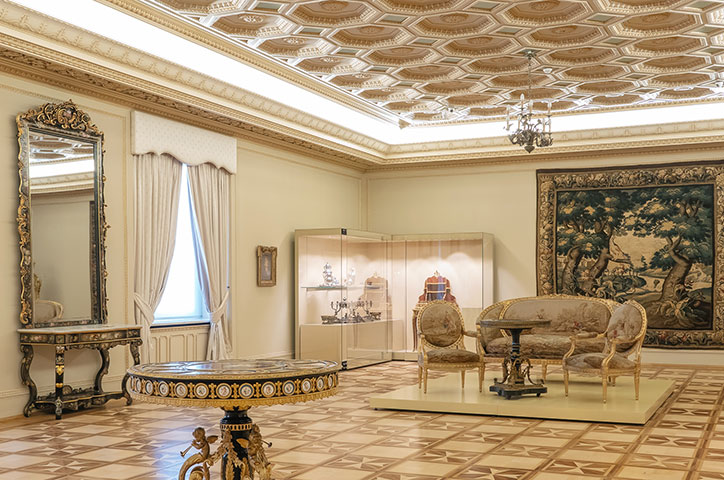
The European Decorative Art Gallery

The European Decorative Art Gallery

Divided into six rooms, illustrates four centuries of the history of taste and refinement, of European innovations, manufactures and craftsmen from Austria, Belgium, Czech Republic, Switzerland, France, Germany, Italy, Holland, Spain, Russia of the 16th-19th centuries and completes the museum's permanent collections, together with the European Art Gallery and the National Gallery.

Dissonance – Platform Germany #3

Dissonance – Platform Germany #3

The National Museum of Art of Romania in partnership with the "Friends of The National Museum of Art of Romania" Association presents between November 10, 2024 and February 23, 2025 the exhibition Dissonance - Platform Germany #3

Theodor Pallady Museum

Theodor Pallady Museum

The museum brings centre stage a core selection of paintings by Theodor Pallady. Together with over 800 prints and drawings from the artist’s Parisian years, these are part of the Serafina and Gheorghe Răut collection, donated to the Romanian state at the end of the 1960s. The collection also comprises French, Dutch, English and Spanish paintings, European furniture and sculpture and a host of various objets d’art which speak eloquently about the manner in which Romanian inter-war intellectuals tried to emulate general trends.

Facebook Page

Acest site folosește cookies

Folosim module cookie pentru a vă pune la dispoziție caracteristici de social media și pentru a analiza traficul. Navigând în continuare, vă exprimați acordul asupra folosirii acestora.