Accessibility Tools

Visiting hours:
The National Museum of Art of Romania, the Theodor Pallady Museum and the K. H. Zambaccian Museum can be visited: Wednesday-Friday 10am-6pm

Saturday-Sunday 11am-7pm, Monday and Tuesday closed. Free entry on the first Wednesday of the month.
The Art Collections Museum: Monday, Tuesday and Friday, 10am-6pm, Saturday and Sunday 11am-7pm, closed Wednesday and Thursday. Free entry on the first Tuesday of the month.
Last entrance: 1 hour before closing for The National Museum of Art of Romania and the Art Collections Museum and 30 minutes for the Theodor Pallady Museum, the K. H. Zambaccian Museum and the temporary exhibitions.
For guided tours, please make a reservation at secretariat@art.museum.ro at least 7 days in advance. 
The National Museum of Art of Romania – main building:
Holiday schedule: December 27–28 – open to the public.
After the holidays: January 3–4 – open; January 7–11 – open. On December 24, 25, 26, and 31, 2025, and January 1 and 2, 2026, the museum will be closed.
The Oriental and Decorative Art Gallery will be open on December 17, 18, and 19, and will be closed from December 20, 2025, to January 11, 2026. 
Starting January 12, the normal schedule will resume.


The National Museum of Art of Romania
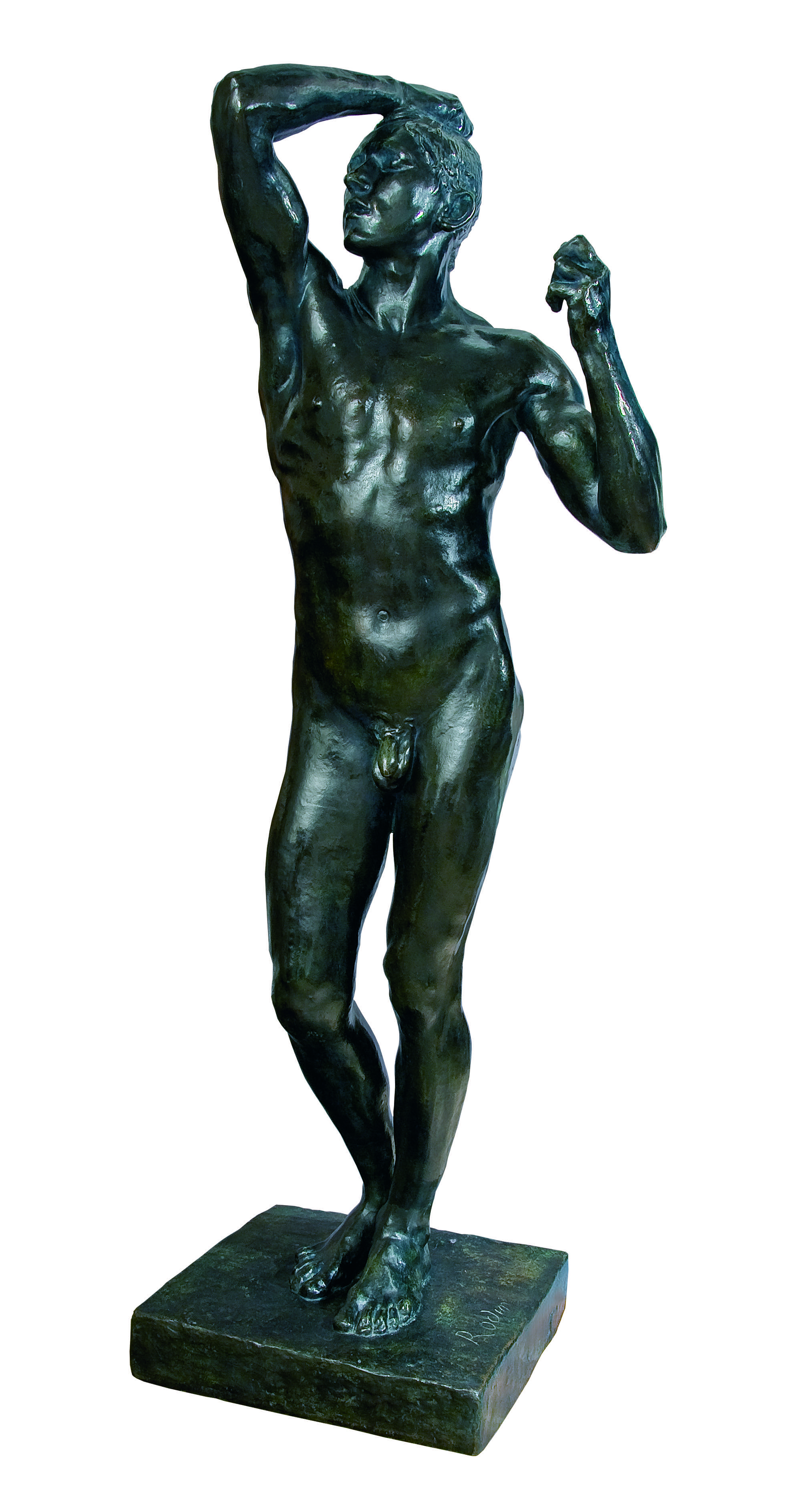
Rodin – The Bronze Age
Artwork description
Auguste Rodin
(Paris,1840-Meudon la Forêt, 1917)
French school
Bronze
Height: 180 cm
Inv. 8449/483
Artwork location
European Art Gallery, 2nd floor, room 12

Rodin worked on this sculpture for nearly two years, between 1875 and 1877. Rather than a professional model, he chose a young Belgian soldier whose physical condition was so good he could sit in awkward, strenous positions up to four hours a day. This way Rodin experimented with postures far from the mainstream of contemporary traditional academic sculpture.

After a visit to Italy to study Classical and Renaissance sculpture directly, Rodin opted for a life-size male nude, standing in a slight contrapposto (180 cm high). His highly naturalistic handling led to the acusation he had taken a mould from life instead of modeling the clay because, Rodin being obliged to ask friends to testify in his favour, having seen him at work. In was only in May 1880 that he managed to convince officials to accept the bronze cast at the Paris Salon.

The museum cast was bought by Queen Marie of Romania, a great admirer of Rodin’s art.

See more works in the European Art Gallery

Facebook Page

Acest site folosește cookies

Folosim module cookie pentru a vă pune la dispoziție caracteristici de social media și pentru a analiza traficul. Navigând în continuare, vă exprimați acordul asupra folosirii acestora.