Accessibility Tools

Visiting hours:
The National Museum of Art of Romania, the Theodor Pallady Museum and the K. H. Zambaccian Museum can be visited: Wednesday-Friday 10am-6pm

Saturday-Sunday 11am-7pm, Monday and Tuesday closed. Free entry on the first Wednesday of the month.
The Art Collections Museum: Monday, Tuesday and Friday, 10am-6pm, Saturday and Sunday 11am-7pm, closed Wednesday and Thursday. Free entry on the first Tuesday of the month.
Last entrance: 1 hour before closing for The National Museum of Art of Romania and the Art Collections Museum and 30 minutes for the Theodor Pallady Museum, the K. H. Zambaccian Museum and the temporary exhibitions.
For guided tours, please make a reservation at secretariat@art.museum.ro at least 7 days in advance. 
The National Museum of Art of Romania – main building:
Holiday schedule: December 27–28 – open to the public.
After the holidays: January 3–4 – open; January 7–11 – open. On December 24, 25, 26, and 31, 2025, and January 1 and 2, 2026, the museum will be closed.
The Oriental and Decorative Art Gallery will be open on December 17, 18, and 19, and will be closed from December 20, 2025, to January 11, 2026. 
Starting January 12, the normal schedule will resume.


The National Museum of Art of Romania
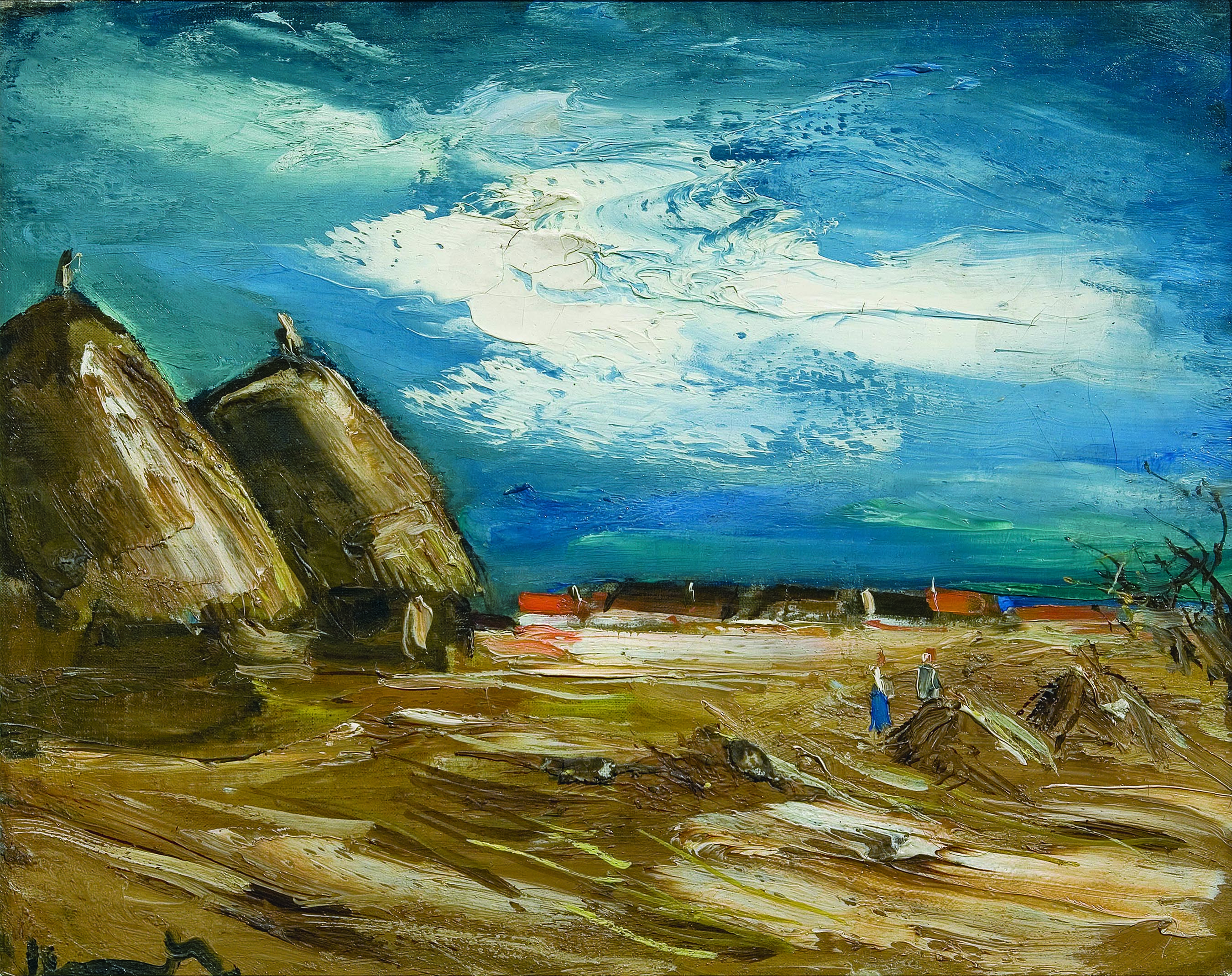
Vlaminck - Landscape with Haystacks
Artwork description
Maurice de Vlaminck
(Paris, 1876 - Rueil la Gadelière, 1958)
French school
Oil on canvas
33,4 x 41,5 cm
Inv. nr. 83928/2526
Artwork location
European Art Gallery, 2nd floor, room 12

Landscape with Haystacks belongs to Vlaminck’s mature years. The artist’s Fauvism is rather unusual given his penchant for austere colours and a spontaneous, vivid, highly emotional brushwork.

Vlaminck often painted landscapes with haystacks resorting to a similar composition scheme. To the left, the low horizon line is interrupted by two massive stacks, drawn by long touches of the brush. The dark greish-blue sky seems to tumble down onto the earth, foretelling an iminent storm. A free brushwork lends the image an almost expressionist dramatic character. This singles out Vlaminck’s creation in relation to that of other Fauve painters like Derain and Matisse reserving him a special place in the history of painting during the first half of the 20th century.

See more works in the European Art Gallery

Facebook Page

Acest site folosește cookies

Folosim module cookie pentru a vă pune la dispoziție caracteristici de social media și pentru a analiza traficul. Navigând în continuare, vă exprimați acordul asupra folosirii acestora.